
Fire Protection Week, sponsored by the National Fire Protection Association, is October 5-11, with the theme, “Charge into Fire Safety: Lithium-Ion Batteries in Your Home.”
We thought it would be a good time to share some useful tips to help you prevent a chimney fire.
Anderson’s Chimney Sweeps & Masonry Services works year-round throughout New Cumberland, PA, and South-Central PA. We see a lot of destruction caused by chimney fires, and we want to do our part to prevent as much of it as possible.
 Chimney fires 101
The tricky thing with chimney fires is that they’re not always obvious. Many are small and fast and go out before people in the house realize they’re happening.
A major fire can destroy the chimney and spread to parts of the home. A smaller fire can begin doing damage to the chimney liner, chimney cap, and other parts of the chimney system.
Most chimney fires are started by ignited creosote, which is a condensed form of smoke from a wood fire. More smoke means more creosote that can build up in the flue.
Chimney sweeping is an important step toward preventing chimney fires
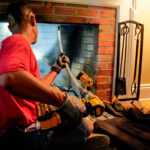
Professional chimney sweeps, such as those at Anderson’s and at many reputable chimney companies throughout Pennsylvania and the U.S., use special tools to safely remove built-up creosote.
The National Fire Protection Association, the Chimney Safety Institute of America, and virtually every other fire safety agency in the country recommend annual chimney sweeping for active chimneys connected to wood-burning fireplaces and other appliances.
More fire prevention measures
Along with scheduling yearly chimney cleaning, you can:
Avoid using accelerants
Lighter fluid, kerosene, charcoal starter, and other accelerants burn super-hot – much hotter than the typical fireplace and chimney is built to withstand. Additionally, these substances release toxic fumes and gases that can spread throughout a home.
Schedule chimney inspections
Your entire chimney should be inspected once a year. The inspection of the chimney liner is particularly important. If the liner has gaps, breaks or missing sections, flames can easily come into contact with parts of your home.
Use dry wood
Firewood that’s had at least six months to dry out will create far less smoke (and creosote) than damp, unseasoned wood.
Report problems
Immediately report anything that you consider unusual happening with your chimney to your chimney service company. It might be nothing to worry about, but it also might be something that could be dangerous.
About NFPA
The National Fire Protection Association began in 1896, after a group of Boston insurance professionals met to create a list of standards for fire sprinklers.
Today, NFPA has developed more than 300 codes and standards for the proper use of equipment and systems that could start fires. The organization is a recognized leader in fire-prevention strategies.
Along with setting codes and standards, NFPA provides training and certification programs for a range of industries. It regularly publishes articles and releases information geared to professionals and homeowners alike. Fire Prevention Week is one of the ways NFPA reaches the general population.
 The help your chimney needs
Anderson’s Chimney Sweeps & Masonry Services is here to help you keep your chimney running right and reduce the chance of a chimney fire. Call us first for chimney sweeping, chimney inspections and all types of chimney repair work.
Reach a local chimney expert by phone or through our handy contact form.